
Monthly Community Conversation: Real Safety Happens in the Gap
November Recap

Written by:
Cait Doherty
Head of Communications
Patient Safety Community
Our November Community Conversation focused on the gap:
The gap between what we design and what people actually do.
The gap between how leaders imagine work and how teams adapt under pressure.
The gap between what is written into policy and what is possible.
These gaps will always exist. The key is this: the better we understand the gap between design and reality, the better we can redesign the system.
To explore this, we welcomed Laura Maguire, PhD, Mike Rayo, PhD, Asher Balkin, and Miriam Balkin from the Cognitive Systems Engineering Lab at The Ohio State University (OSU). These researchers ground their work in proactive safety, using its principles to understand complex systems and its hazards. They are turning theory into practical tools that help organizations learn from the people doing the real work. Their approach uncovers patterns of new/repeat/hidden hazards, fosters cross-industry learning, and helps prepare the next generation of people working to improve safety in healthcare.
The OSU team introduced us to Systemic Contributors, Adaptations, and Diagramming, otherwise known as SCAD.
What the SCAD?
SCAD is a methodology designed to reveal how people work inside complex systems.
What it maps:
Conditions people face.
Constraints that shape decisions.
Adjustments they make to keep patients safe.
Systemic contributors behind recurring hazards.
How it works: Interviews, adaptation stories, and diagramming to uncover real-world practices.
Where it fits: Hallway conversations, mini workshops, shadowing, or post-event debriefs.
Interviewing is core to SCAD.
Experienced interviewers like clinical psychologists or those trained in cognitive interviewing model how to ask curious, non-defensive questions. New interviewers rapidly build skill through observation, debriefing, and practice. This ensures SCAD captures authentic workflows while fitting naturally into day-to-day operations.
SCAD Care Packages.
The OSU team emphasized that SCAD doesn’t require them on-site and isn’t meant as one-time consulting. Their “SCAD Care Packages” provide implementation guides, though the strongest results come from a “see-do-teach” model, where OSU demonstrates, coaches, and supports teams until they can teach others. While still evolving, the team aims for SCAD to become self-sustaining and intrinsically motivating within organizations.
SCAD in Action: Rural Clinics
One PSC member shared their story of deploying SCAD.
In a 12-site rural clinic, managing suicidal callers strained operations. With few policies or programs, staff navigated high-stakes situations on their own. Safety lived in the gap between what was designed and what was happening. Leadership wasn’t responding to Root Cause Analysis reports, and the strain on staff and patients kept growing.
The OSU team deployed SCAD through its Care Package. Interviews spanned clinical and non-clinical staff, including volunteers giving personal time, surfacing real-world adaptations, improvisations, and practical solutions.
The analysis was said to have highlighted:
Missing policies
Hazards created by constraints
Areas where frontline innovation was happening
A Chief Information Officer, experienced in building learning organizations, reviewed the findings and the stories from staff in distress. While it’s unclear if SCAD will be fully adopted, the insights seemed to have jumpstarted change.
Our Community knows that lasting impact takes time. Leadership and organizations must first shift their thinking to respond effectively. Still, for this rural community, these individual stories seem to have helped reduce strain and improved care in this specific instance.
Other SCAD deployments include sterile processing workflows in hospitals (both on-site and distributed locations) and U.S. Department of Defense acquisitions.
Questions about how SCAD was deployed? Reach out and we can connect you to the right people.
Post-Discussion: PSC’s Reflection
The PSC Operations Team met the following day to reflect. We agreed that our Community shared a core belief: real safety begins with learning from the frontline. Our goal is to remove barriers for the people who are already doing the hard, often invisible, “guerrilla safety work” required to keep patients and staff safe when systems inevitably fall short.
We also recognize the reality that no two organizations look the same. Resources differ. Authority structures differ. The way staff are spoken to and supported differ. Introducing new safety methods into this complex system is challenging, and yet essential.
Our reflection surfaced several questions we believe matter for SCAD and for any methodology in this systems design era:
What is immediately useful in my world? My daily work is addressing harm and hazards while supporting patients and staff. What should I be taking from this conversation today?
How do I translate this for my team? Even nurses trained in safety often view it through a clinical lens. How do we make SCAD practical, resonant, and “sticky” for teams and leadership?
If I can’t use it today, what can I use later? What tools or templates will help when the timing aligns, including:
current-state mapping
guidance for navigating organizational structures, resource levels, and leadership cultures
How can SCAD or similar methods support staff post-event? Especially in helping teams recognize hidden hazards, understand systemic contributors, and reduce blame, even when system-level change is slow.
How does SCAD differ from other methods already being used? Understanding similarities, differences, and complementarities helps the frontline choose tools that fit their unique needs.
These questions reflect that proactive safety is not only technical but is deeply relational.
Systems design methods like SCAD remind us that knowledge, storytelling, and co-creation carry both power and responsibility. When frontline staff share how work happens, they restore agency, surface context that is usually lost, and build empathy across roles and hierarchies. Their stories bridge past and present realities, revealing patterns that drive future systemic change.
The Estuary: Balancing the Vertical and Horizontal in Healthcare
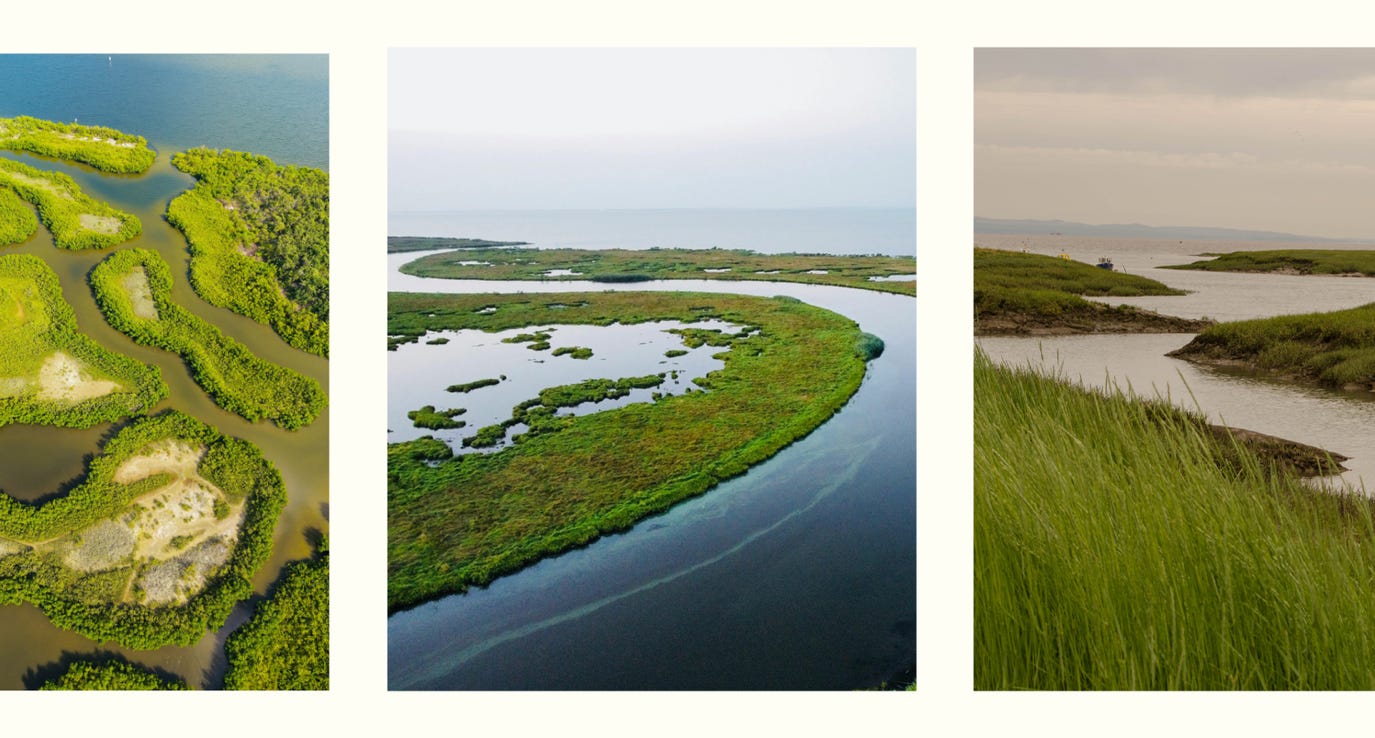
Change is rarely linear. Think of an estuary, a body of water where salt and freshwater meet. The turbulent mixing before equilibrium mirrors what many frontline teams experience: competing pressures, shifting resources, and the constant negotiation between policy (vertical) and practice (horizontal).
Vertical (regulatory/statutory) approaches offer structure and consistency, but they tend to oversimplify reality, erase context, and place compliance burdens on already-stretched staff.
Horizontal (peer-based) approaches like SCAD and systems-oriented methods encourage learning, adaptation, and sensemaking within the real constraints of everyday work.
Safety lives in the turbulence between policy and practice. Equilibrium comes from listening deeply, engaging collaboratively, and valuing multiple ways of knowing. There’s no single destination or method to solve the complexity of our healthcare system. The next evolution of healthcare will be an ongoing practice of noticing, adjusting, learning, and redesigning together.
Help the PSC Improve: Reflections & Next Steps
As we reflect on this year, we’re proud of what this Community has built together. We now have a logo that reflects our mission and identity. Our demonstration project: Drop the Pounds. Keep the Kilos. is progressing and offering a real-world example of collaborative, systemic safety work. We continue meeting people like you who are committed to transforming healthcare, beginning with patient safety.
We’ll take December off from the Community Conversation and reconnect in January 2026. Keep an eye out for a new invite.
In the meantime, reach out anytime with ideas, questions, or needs. You help drive the PSC.
We wish you a joyful holiday season and a restorative end to the year. Thank you for being a part of a movement committed to redesigning systems, not the humans working within them.
See you next year.
-C
Better Healthcare by Design.
Better Together.
Patient Safety Community